
MVM Centre for Advanced Physiotherapy
Conditions We Treat
These are just a few examples of the conditions we treat—at CAPT – Centre for Advanced Physiotherapy, we manage a wide range of musculoskeletal, neurological, and rehabilitation needs.
MSK Conditions We Treat
Click on each condition to learn about symptoms, causes, treatment, and exercises.
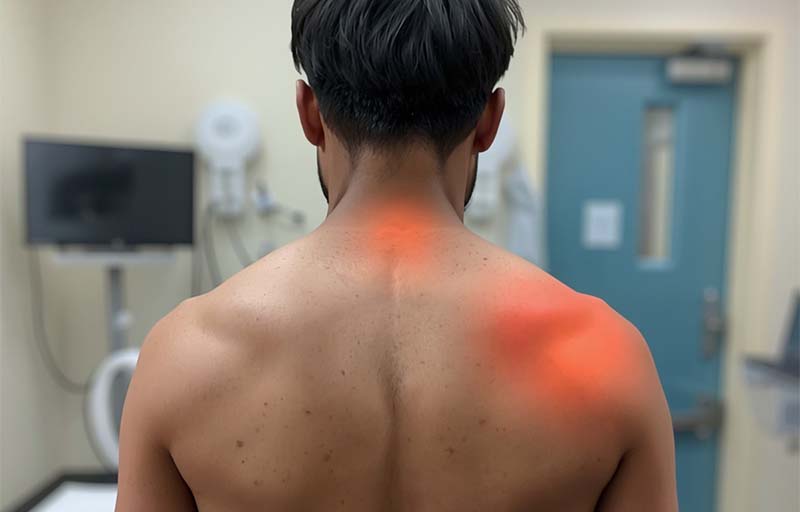
Frozen Shoulder
What is Frozen Shoulder?
Frozen shoulder (adhesive capsulitis) is a condition where the shoulder joint capsule becomes inflamed and stiff, severely restricting movement.
Symptoms
- Gradual onset of shoulder pain
- Progressive stiffness and loss of range of motion
- Difficulty raising the arm or reaching behind the back
- Pain that worsens at night
Causes
- Prolonged immobilisation after injury or surgery
- Diabetes (higher risk)
- Hormonal imbalances
- Autoimmune disorders
- Age (40-60 years)
Physiotherapy Treatment
Treatment includes joint mobilisation techniques, soft tissue massage, ultrasound therapy, and progressive stretching programmes. Heat therapy is used before exercises to improve tissue extensibility.
Recommended Exercises
- Pendulum swings
- Wall climbing exercises
- Cross-body shoulder stretch
- Towel stretch behind the back
- Active-assisted range of motion exercises
Low Back Pain
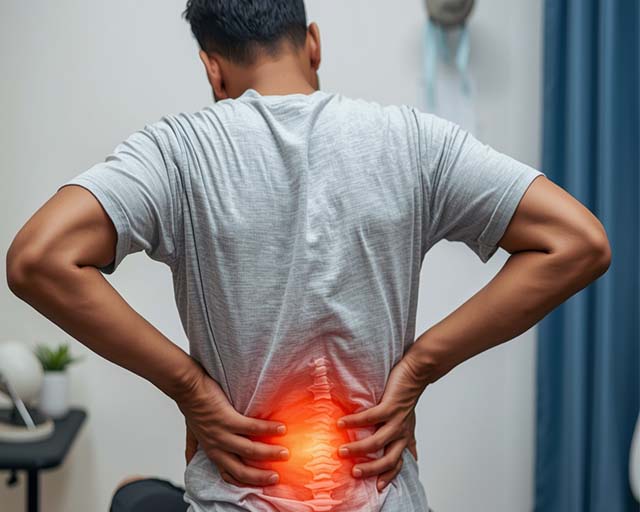
What is Low Back Pain?
Low back pain is one of the most common musculoskeletal complaints, affecting the lumbar spine region. It can be acute or chronic, ranging from muscle strain to disc-related issues.
Symptoms
- Dull aching or sharp pain in the lower back
- Stiffness especially in the morning
- Pain radiating to the buttocks or legs
- Difficulty standing upright or bending
- Muscle spasms
Causes
- Poor posture and ergonomics
- Muscle strain or ligament sprain
- Disc herniation or degeneration
- Sedentary lifestyle
- Improper lifting techniques
- Obesity
Physiotherapy Treatment
We use a combination of manual therapy (spinal mobilisation), McKenzie method, core stabilisation training, posture correction, and ergonomic advice. Modalities like TENS, ultrasound, and heat/cold therapy are used for pain relief.
Recommended Exercises
- Cat-cow stretches
- Pelvic tilts
- Bird-dog exercise
- Bridging exercises
- Child's pose stretch
- Core bracing and plank holds
Cervical Spondylosis
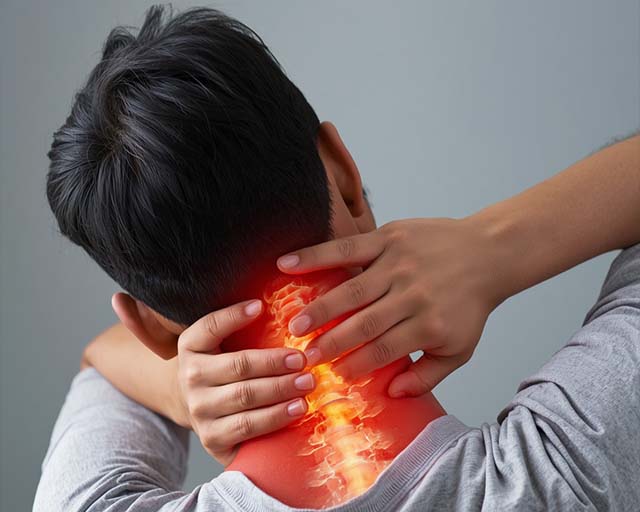
What is Cervical Spondylosis?
Cervical spondylosis is age-related wear and tear of the spinal discs and vertebrae in the neck (cervical spine), leading to pain and stiffness.
Symptoms
- Neck pain and stiffness
- Headaches starting from the base of the skull
- Grinding or popping sensation with neck movement
- Numbness or tingling in the arms or hands
- Dizziness
Causes
- Age-related degeneration of cervical discs
- Bone spurs (osteophytes)
- Dehydrated spinal discs
- Prolonged poor posture (desk work, phone use)
- Previous neck injuries
Physiotherapy Treatment
Treatment focuses on pain relief through modalities (IFT, ultrasound), manual therapy for cervical mobilisation, isometric neck strengthening, postural correction, and ergonomic guidance for workstations.
Recommended Exercises
- Chin tucks
- Isometric neck exercises (all directions)
- Neck rotation stretches
- Upper trapezius stretches
- Scapular retraction exercises
- Thoracic extension stretches
Knee Osteoarthritis
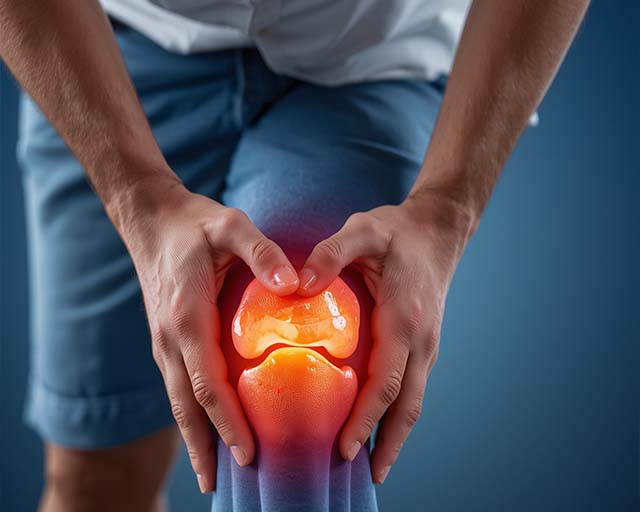
What is Knee Osteoarthritis?
Knee osteoarthritis is a degenerative joint disease where the protective cartilage on the ends of the knee bones wears down over time, causing pain, swelling, and reduced mobility.
Symptoms
- Pain during or after movement
- Joint stiffness after rest
- Swelling and warmth around the knee
- Crepitus (grinding sensation)
- Reduced range of motion
- Difficulty with stairs and squatting
Causes
- Age-related cartilage degeneration
- Obesity and excess body weight
- Previous knee injuries
- Genetic predisposition
- Malalignment (bow legs or knock knees)
- Overuse from repetitive activities
Physiotherapy Treatment
Management includes quadriceps and hamstring strengthening, manual therapy for joint mobilisation, weight management guidance, taping, bracing, and modalities like ultrasound and cryotherapy for pain and inflammation control.
Recommended Exercises
- Straight leg raises
- Quad sets (isometric)
- Hamstring curls
- Seated knee extensions
- Wall squats (partial range)
- Stationary cycling
Sciatica
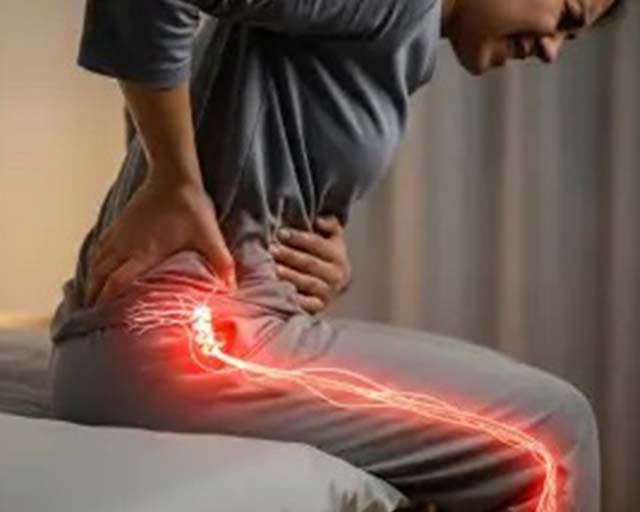
What is Sciatica?
Sciatica refers to pain that radiates along the path of the sciatic nerve, from the lower back through the hip and buttock, down each leg. It usually affects only one side.
Symptoms
- Sharp shooting pain from lower back to leg
- Numbness or tingling in the leg or foot
- Weakness in the affected leg
- Pain worsening with sitting
- Burning or electric shock sensation
Causes
- Herniated or bulging lumbar disc
- Spinal stenosis
- Piriformis syndrome
- Spondylolisthesis
- Pregnancy
- Prolonged sitting
Physiotherapy Treatment
Treatment includes spinal mobilisation, neural mobilisation (nerve gliding techniques), McKenzie method, core stabilisation, piriformis stretching, and ergonomic advice. Traction may be used in some cases.
Recommended Exercises
- Sciatic nerve gliding exercises
- Piriformis stretch
- Knee-to-chest stretch
- Press-up extensions (McKenzie)
- Hamstring stretches
- Core stabilisation exercises
Tennis Elbow
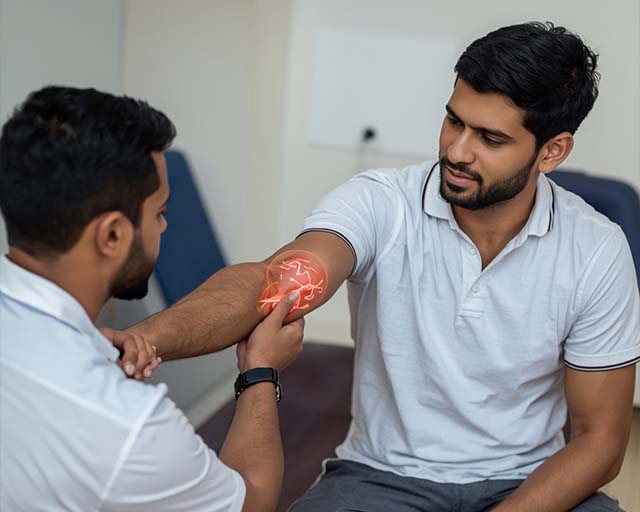
What is Tennis Elbow?
Tennis elbow (lateral epicondylitis) is an overuse injury causing pain on the outside of the elbow where the forearm extensor tendons attach to the bone.
Symptoms
- Pain on the outer side of the elbow
- Weak grip strength
- Pain worsening with gripping or twisting motions
- Tenderness over the lateral epicondyle
- Pain radiating down the forearm
Causes
- Repetitive wrist extension activities
- Improper technique in racquet sports
- Occupational overuse (typing, manual work)
- Age (30-50 years)
- Poor forearm muscle conditioning
Physiotherapy Treatment
Treatment includes eccentric strengthening of wrist extensors, deep friction massage, ultrasound therapy, taping/bracing, and activity modification. Dry needling may also be used.
Recommended Exercises
- Eccentric wrist extensions with light weight
- Wrist flexor and extensor stretches
- Forearm pronation/supination
- Grip strengthening with stress ball
- Tyler twist exercise with FlexBar
Plantar Fasciitis
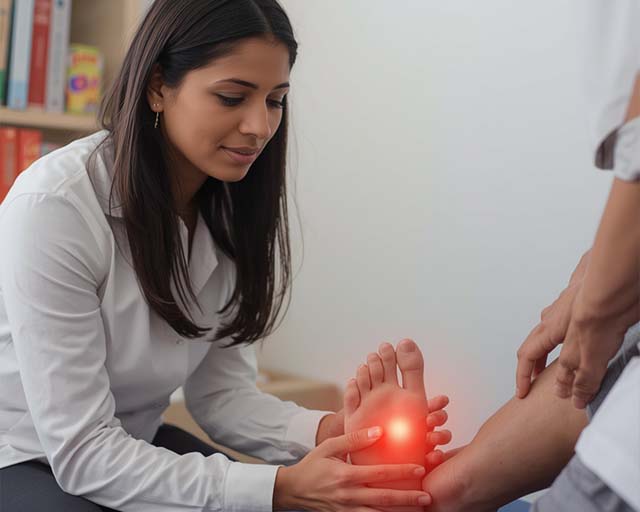
What is Plantar Fasciitis?
Plantar fasciitis is inflammation of the plantar fascia — a thick band of tissue that runs along the bottom of the foot connecting the heel bone to the toes.
Symptoms
- Sharp heel pain, especially with first steps in the morning
- Pain after prolonged standing or walking
- Pain that decreases with activity but returns after rest
- Tenderness at the bottom of the heel
Causes
- Tight calf muscles and Achilles tendon
- High arches or flat feet
- Obesity or sudden weight gain
- Prolonged standing
- Improper footwear
- Sudden increase in activity
Physiotherapy Treatment
Treatment includes calf and plantar fascia stretching, ultrasound therapy, taping, custom orthotics recommendation, night splints, and progressive loading exercises.
Recommended Exercises
- Calf stretches (gastrocnemius and soleus)
- Plantar fascia rolling with frozen bottle
- Towel scrunches for intrinsic foot muscles
- Toe curls and marble pickups
- Eccentric heel drops on a step
ACL Injury
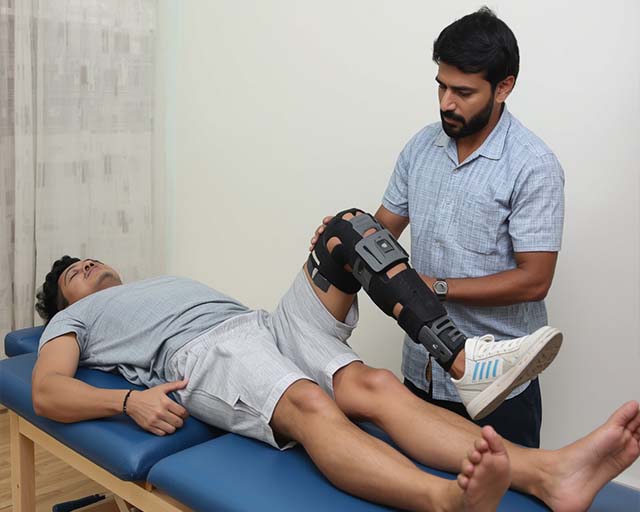
What is ACL Injury?
An ACL (Anterior Cruciate Ligament) injury is a tear of one of the major stabilising ligaments in the knee, common in sports involving sudden stops, jumping, and direction changes.
Symptoms
- Loud pop at the time of injury
- Rapid swelling within hours
- Severe pain and inability to continue activity
- Feeling of knee instability or giving way
- Loss of full range of motion
Causes
- Sudden deceleration or stopping
- Pivoting with foot firmly planted
- Landing awkwardly from a jump
- Direct blow to the knee
- Female athletes at higher risk due to anatomy
Physiotherapy Treatment
Pre-surgical rehab focuses on reducing swelling, restoring ROM, and strengthening muscles. Post-surgical rehab follows a structured protocol over 6-9 months including progressive strengthening, proprioception training, and sport-specific drills.
Recommended Exercises
- Quad sets and straight leg raises (early phase)
- Heel slides for ROM
- Mini squats and leg press
- Balance board exercises
- Step-ups and lunges (mid phase)
- Running and agility drills (late phase)
Rotator Cuff Tear
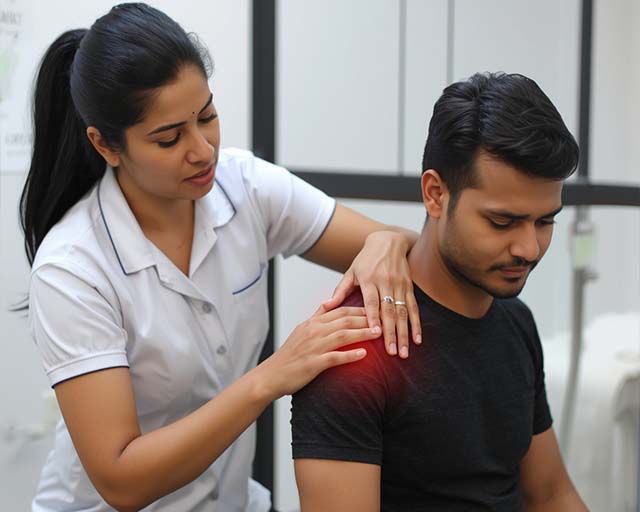
What is Rotator Cuff Tear?
A rotator cuff tear is an injury to one or more of the four tendons that stabilise the shoulder joint, causing pain and weakness.
Symptoms
- Pain at rest and at night
- Pain when lifting or lowering the arm
- Weakness when rotating the arm
- Crackling sensation with shoulder movement
- Difficulty reaching behind the back
Causes
- Repetitive overhead motions
- Age-related degeneration
- Acute injury from a fall or heavy lifting
- Bone spurs rubbing against the tendon
- Poor blood supply with aging
Physiotherapy Treatment
Conservative treatment includes progressive rotator cuff strengthening, scapular stabilisation, manual therapy, and activity modification. Post-surgical rehab follows surgeon's protocol with phased progression.
Recommended Exercises
- Pendulum exercises
- Isometric rotator cuff exercises
- External rotation with resistance band
- Internal rotation with resistance band
- Scapular squeezes
- Wall push-ups (progressive)
Herniated Disc
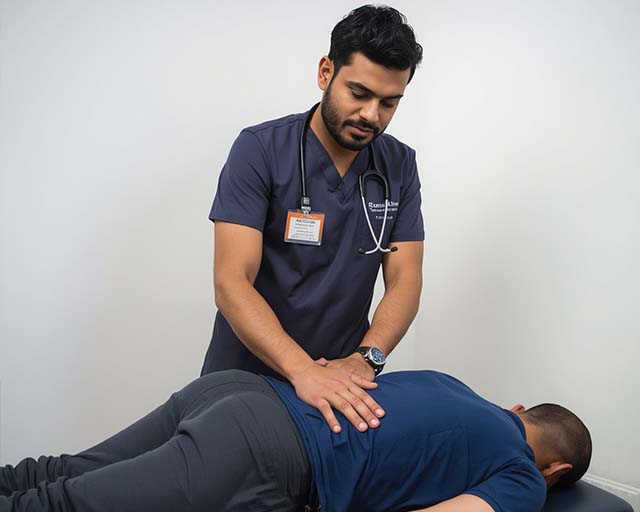
What is Herniated Disc?
A herniated disc occurs when the soft inner core of a spinal disc pushes through a crack in the tougher outer casing, potentially pressing on nearby nerves.
Symptoms
- Back pain that may radiate to the arm or leg
- Numbness or tingling in the affected limb
- Muscle weakness along the nerve pathway
- Pain worsening with coughing or sneezing
- Pain with prolonged sitting
Causes
- Age-related disc degeneration
- Heavy or improper lifting
- Repetitive bending or twisting
- Trauma or injury
- Excess body weight
- Sedentary lifestyle
Physiotherapy Treatment
Treatment includes McKenzie method directional preference exercises, spinal mobilisation, core stabilisation, neural mobilisation, traction, and postural correction. Education on proper lifting mechanics is essential.
Recommended Exercises
- Prone press-ups (McKenzie extension)
- Core bracing exercises
- Nerve gliding/flossing exercises
- Pelvic tilts
- Modified planks
- Bird-dog exercise
Carpal Tunnel Syndrome
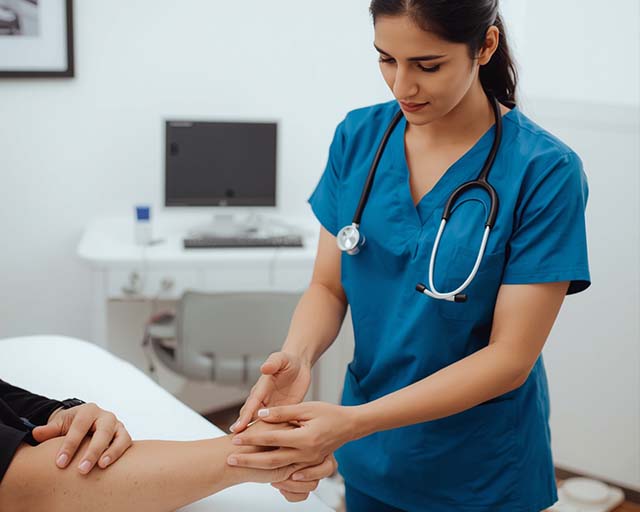
What is Carpal Tunnel Syndrome?
Carpal tunnel syndrome is compression of the median nerve as it passes through the carpal tunnel in the wrist, causing numbness, tingling, and weakness in the hand.
Symptoms
- Numbness and tingling in thumb, index, and middle fingers
- Hand weakness and dropping objects
- Pain radiating up the forearm
- Symptoms worse at night
- Difficulty with fine motor tasks
Causes
- Repetitive hand/wrist movements (typing, assembly work)
- Wrist fractures or injuries
- Pregnancy and hormonal changes
- Diabetes and thyroid disorders
- Obesity
Physiotherapy Treatment
Treatment includes nerve gliding exercises, wrist splinting (especially at night), ergonomic workstation assessment, ultrasound therapy, and tendon gliding exercises. Activity modification is emphasised.
Recommended Exercises
- Median nerve gliding exercises
- Tendon gliding sequences
- Wrist flexor and extensor stretches
- Finger spreads and fist clenches
- Prayer stretch and reverse prayer stretch
Ankle Sprain
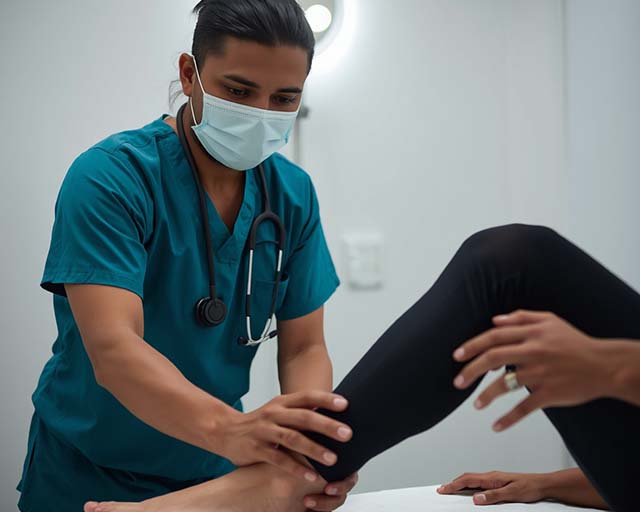
What is Ankle Sprain?
An ankle sprain occurs when the ligaments that support the ankle are stretched or torn, usually from an inversion (rolling inward) injury.
Symptoms
- Pain and tenderness
- Swelling and bruising
- Difficulty bearing weight
- Restricted range of motion
- Feeling of instability
Causes
- Walking or running on uneven surfaces
- Landing awkwardly from a jump
- Sudden change of direction in sports
- Weak ankle muscles
- Previous ankle sprains
Physiotherapy Treatment
Rehabilitation follows a phased approach: RICE protocol initially, then progressive weight-bearing, range of motion exercises, strengthening, proprioception training, and sport-specific agility drills.
Recommended Exercises
- Ankle alphabet (ROM exercises)
- Calf raises (bilateral to unilateral)
- Resistance band inversion/eversion
- Single-leg balance exercises
- Wobble board training
- Lateral hops and agility drills
Post-Fracture Rehab
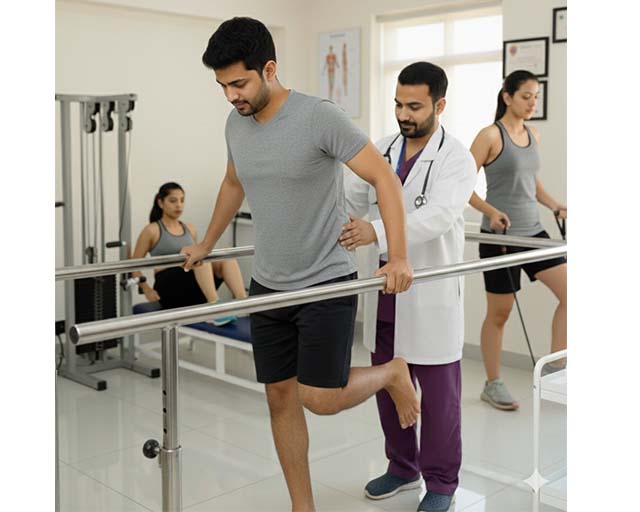
What is Post-Fracture Rehab?
Post-fracture rehabilitation helps restore function, strength, and mobility after a bone fracture has healed, addressing stiffness and weakness from immobilisation.
Symptoms
- Joint stiffness near fracture site
- Muscle weakness and atrophy
- Reduced range of motion
- Swelling
- Difficulty with functional activities
Causes
- Period of immobilisation in cast/brace
- Muscle disuse atrophy
- Scar tissue formation
- Joint adhesions
- Reduced proprioception
Physiotherapy Treatment
Rehabilitation includes progressive range of motion exercises, graduated strengthening, scar tissue mobilisation, functional training, and proprioception retraining. Weight-bearing is progressed per surgeon's protocol.
Recommended Exercises
- Active and active-assisted ROM exercises
- Isometric strengthening (early phase)
- Progressive resistance exercises
- Functional movement training
- Balance and proprioception drills
Muscle Strain
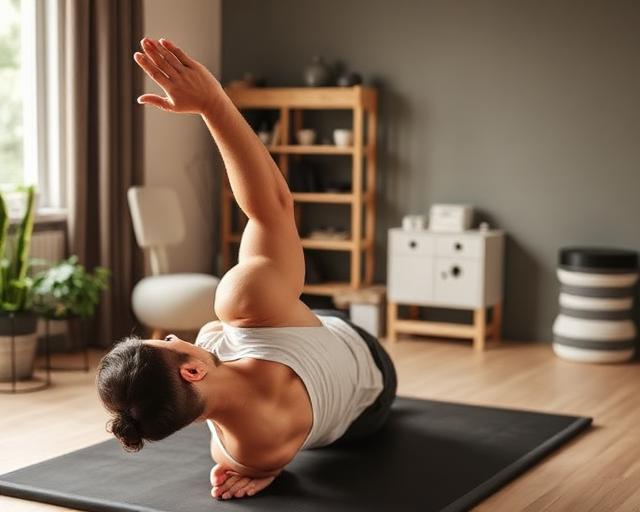
What is Muscle Strain?
A muscle strain is a stretch or tear in muscle fibres or tendons, ranging from mild (grade 1) to severe complete tears (grade 3).
Symptoms
- Sudden onset of pain during activity
- Swelling and bruising
- Limited range of motion
- Muscle weakness
- Pain with contraction or stretching
Causes
- Overexertion during physical activity
- Inadequate warm-up
- Muscle fatigue
- Poor flexibility
- Sudden explosive movements
- Muscle imbalances
Physiotherapy Treatment
Treatment follows a progressive loading approach: initial RICE protocol, gentle ROM exercises, progressive isometric to concentric to eccentric strengthening, and sport/activity-specific rehabilitation.
Recommended Exercises
- Gentle stretching (pain-free range)
- Isometric contractions
- Progressive resistance exercises
- Eccentric strengthening
- Sport-specific movements
- Plyometric exercises (late phase)
Fibromyalgia
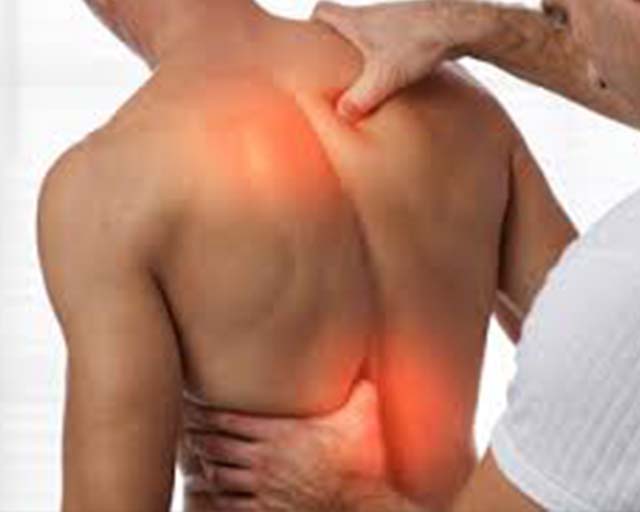
What is Fibromyalgia?
Fibromyalgia is a chronic condition characterised by widespread musculoskeletal pain, fatigue, sleep disturbances, and cognitive difficulties.
Symptoms
- Widespread body pain
- Chronic fatigue
- Sleep disturbances
- Cognitive difficulties (fibro fog)
- Headaches
- Sensitivity to touch, light, and sound
Causes
- Central nervous system sensitisation
- Genetic factors
- Physical or emotional trauma
- Infections
- Stress and anxiety
- Hormonal imbalances
Physiotherapy Treatment
Management includes graded aerobic exercise, gentle strengthening, aquatic therapy, relaxation techniques, pain neuroscience education, and sleep hygiene guidance. The approach is gentle and patient-paced.
Recommended Exercises
- Walking programmes (graded)
- Gentle swimming or water exercises
- Yoga and tai chi
- Breathing exercises
- Gentle stretching routine
- Low-impact aerobics
Scoliosis
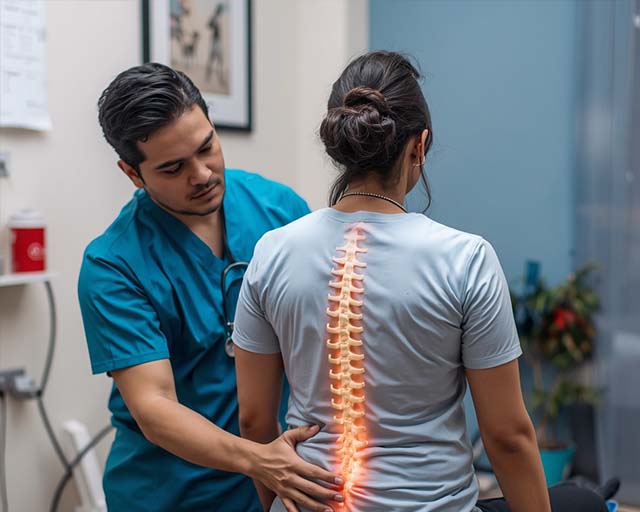
What is Scoliosis?
Scoliosis is a sideways curvature of the spine, most commonly diagnosed in adolescents. It can range from mild to severe and may require different treatment approaches.
Symptoms
- Visible spinal curvature
- Uneven shoulders or hips
- One shoulder blade more prominent
- Uneven waist
- Back pain (in adults)
- Rib prominence when bending forward
Causes
- Idiopathic (unknown cause, most common)
- Congenital spinal defects
- Neuromuscular conditions (cerebral palsy, muscular dystrophy)
- Degenerative changes in adults
- Connective tissue disorders
Physiotherapy Treatment
Treatment uses the Schroth method and corrective exercises specific to the curve pattern. Focus is on de-rotation, elongation, and stabilisation. Breathing exercises to expand the concave side and postural correction are key components.
Recommended Exercises
- Schroth-specific corrective exercises
- Asymmetric breathing exercises
- Elongation and de-rotation exercises
- Core stabilisation
- Postural correction exercises
- Swimming (backstroke)
Temporomandibular Joint (TMJ)
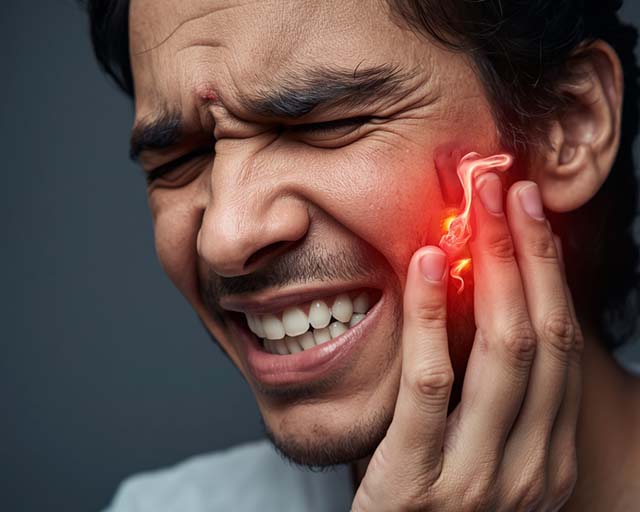
What is Temporomandibular Joint (TMJ)?
TMJ disorder affects the jaw joint and surrounding muscles, causing pain, clicking, and difficulty with chewing and mouth opening.
Symptoms
- Jaw pain or tenderness
- Clicking or popping sounds when opening mouth
- Difficulty or pain while chewing
- Locking of the jaw
- Headaches and ear pain
- Facial muscle tension
Causes
- Teeth grinding or clenching (bruxism)
- Jaw injury or trauma
- Arthritis in the TMJ
- Stress and muscle tension
- Misalignment of teeth or jaw
- Poor posture (forward head posture)
Physiotherapy Treatment
Treatment includes manual therapy for the TMJ (mobilisation), soft tissue massage of jaw muscles, postural correction (cervical spine), relaxation techniques, and jaw exercise programmes.
Recommended Exercises
- Jaw opening and closing exercises
- Lateral jaw movements
- Chin tucks for posture
- Resisted jaw opening and closing
- Jaw relaxation techniques
- Self-massage of masseter and temporalis muscles
Neuro Conditions We Treat
Specialised neurological rehabilitation to restore function and independence.
Stroke Rehabilitation
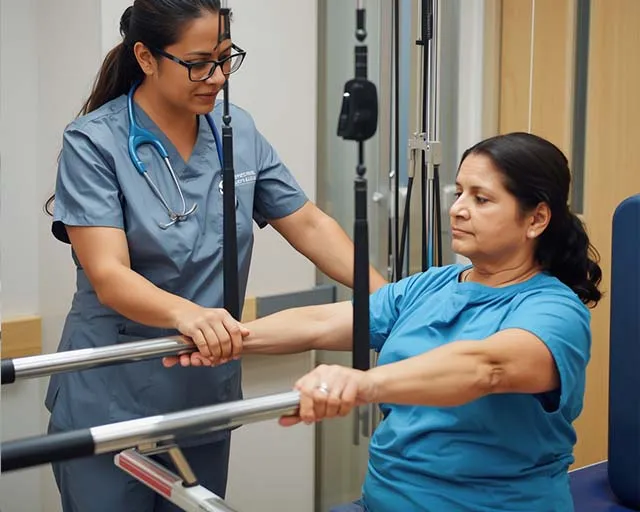
What is Stroke Rehabilitation?
Stroke (cerebrovascular accident) occurs when blood supply to the brain is interrupted, causing brain damage that can affect movement, speech, cognition, and daily function.
Symptoms
- Weakness or paralysis on one side (hemiplegia)
- Difficulty with speech and swallowing
- Balance and coordination problems
- Cognitive and memory issues
- Visual disturbances
- Spasticity in affected limbs
Causes
- Blood clot blocking a brain artery (ischaemic stroke)
- Rupture of a blood vessel in the brain (haemorrhagic stroke)
- High blood pressure
- Heart disease
- Diabetes
- Smoking and high cholesterol
Physiotherapy Treatment
Comprehensive neuro rehabilitation includes task-specific training, constraint-induced movement therapy, balance and gait training, spasticity management, ADL training, and caregiver education. Treatment is individualised based on stroke type and severity.
Recommended Exercises
- Weight shifting and balance exercises
- Sit-to-stand training
- Gait training with/without assistive devices
- Upper limb reaching and grasping activities
- Constraint-induced movement therapy tasks
- Core stability exercises in sitting and standing
Parkinson's Disease
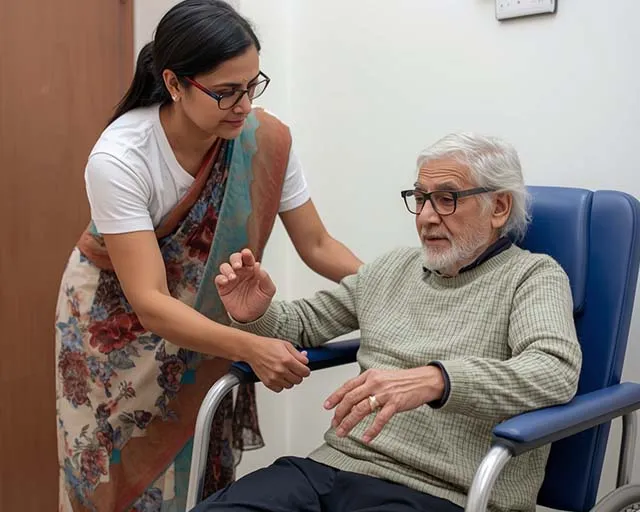
What is Parkinson's Disease?
Parkinson's disease is a progressive neurological disorder affecting the dopamine-producing neurons in the brain, leading to movement difficulties.
Symptoms
- Tremor at rest
- Rigidity and stiffness
- Bradykinesia (slow movement)
- Postural instability and stooped posture
- Shuffling gait
- Difficulty with fine motor tasks
Causes
- Loss of dopamine-producing neurons
- Genetic factors
- Environmental toxins exposure
- Age (risk increases after 60)
- Male gender (slightly higher risk)
Physiotherapy Treatment
Treatment includes LSVT BIG programme (amplitude-based training), balance and fall prevention training, gait training with cueing strategies, flexibility exercises for rigidity, and dual-task training.
Recommended Exercises
- Big amplitude movements (LSVT BIG)
- Marching in place with high knees
- Tandem walking
- Seated boxing or reaching exercises
- Vocal exercises (LSVT LOUD)
- Rhythmic auditory cueing for walking
Multiple Sclerosis
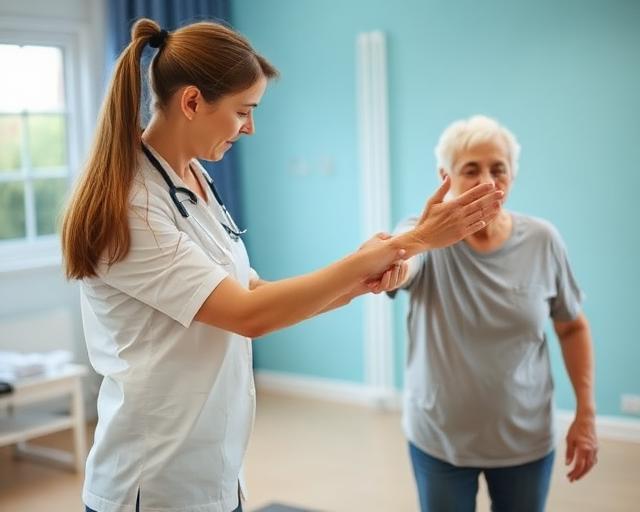
What is Multiple Sclerosis?
Multiple sclerosis (MS) is a chronic autoimmune disease where the immune system attacks the protective myelin sheath of nerve fibres, disrupting communication between brain and body.
Symptoms
- Fatigue (most common symptom)
- Numbness and tingling
- Muscle weakness and spasticity
- Balance and coordination issues
- Vision problems
- Cognitive difficulties
Causes
- Autoimmune attack on myelin sheath
- Genetic susceptibility
- Environmental factors (low vitamin D, latitude)
- Viral infections (Epstein-Barr virus)
- Smoking
Physiotherapy Treatment
Treatment focuses on fatigue management, maintaining mobility and function, spasticity management, balance training, and exercise prescription tailored to energy levels. Cooling strategies and pacing techniques are important.
Recommended Exercises
- Aquatic exercises (in cool water)
- Moderate-intensity aerobic exercise
- Stretching for spasticity management
- Balance exercises on stable/unstable surfaces
- Resistance training (avoiding overheating)
- Yoga and tai chi for flexibility and relaxation
Spinal Cord Injury
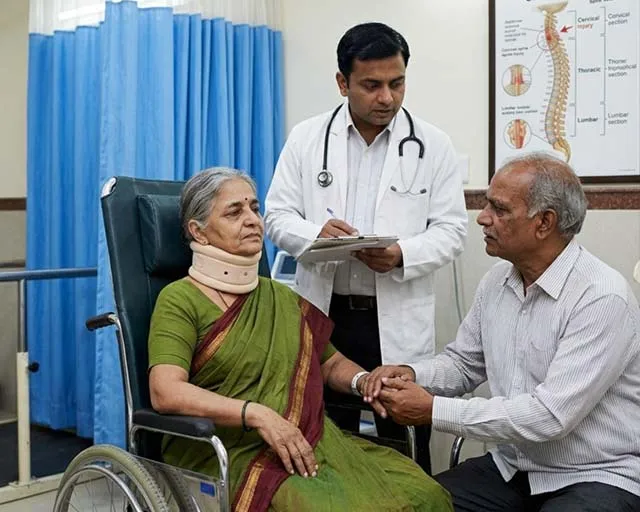
What is Spinal Cord Injury?
Spinal cord injury (SCI) is damage to the spinal cord resulting in loss of function, sensation, or mobility below the level of injury.
Symptoms
- Loss of movement (paralysis)
- Loss of sensation
- Loss of bladder and bowel control
- Spasticity or muscle spasms
- Pain at or below injury level
- Breathing difficulties (higher-level injuries)
Causes
- Traumatic injury (falls, road accidents, sports)
- Non-traumatic causes (tumours, infections, vascular issues)
- Spinal compression
- Violence (gunshot, stabbing)
Physiotherapy Treatment
Rehabilitation focuses on maximising remaining function, wheelchair skills, transfer training, upper limb strengthening, respiratory management, bowel and bladder management, and psychological support.
Recommended Exercises
- Upper limb strengthening exercises
- Wheelchair propulsion and skills training
- Seated balance exercises
- Respiratory exercises (diaphragmatic breathing)
- Passive range of motion for paralysed limbs
- Standing frame/tilt table activities
Bell's Palsy
What is Bell's Palsy?
Bell's palsy is sudden weakness or paralysis of the facial muscles on one side, caused by inflammation of the facial nerve (CN VII).
Symptoms
- Sudden drooping of one side of the face
- Inability to close the eye on affected side
- Loss of taste sensation
- Drooling
- Increased sensitivity to sound
- Difficulty eating and drinking
Causes
- Viral infection (herpes simplex virus most common)
- Inflammation of the facial nerve
- Immune system response
- Stress and cold exposure
- Pregnancy (third trimester)
Physiotherapy Treatment
Treatment includes facial muscle re-education, electrical stimulation, mirror therapy, eye protection and care, massage, and progressive facial exercises. Recovery typically occurs within 3-6 months.
Recommended Exercises
- Eye closure exercises
- Lip pursing and smiling exercises
- Cheek puffing
- Eyebrow raising
- Mirror biofeedback exercises
- Gentle facial massage
Peripheral Neuropathy
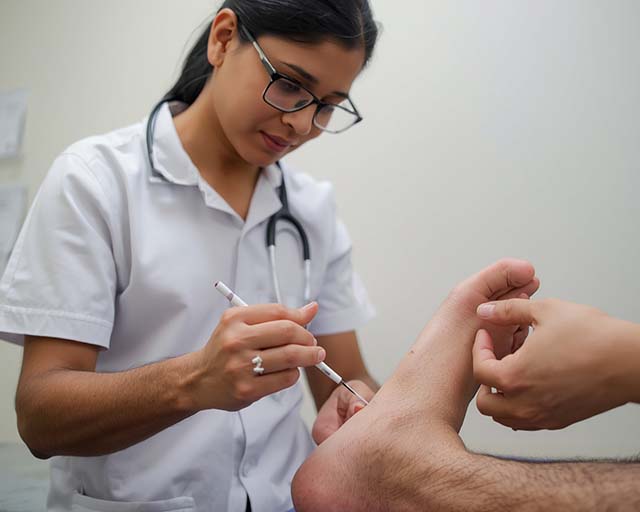
What is Peripheral Neuropathy?
Peripheral neuropathy is damage to the peripheral nerves, causing weakness, numbness, and pain, usually in the hands and feet.
Symptoms
- Tingling and numbness in extremities
- Burning or sharp pain
- Sensitivity to touch
- Muscle weakness
- Loss of coordination
- Balance problems
Causes
- Diabetes (most common cause)
- Vitamin B12 deficiency
- Alcohol abuse
- Autoimmune diseases
- Infections
- Certain medications (chemotherapy)
Physiotherapy Treatment
Treatment includes sensory re-education, balance training, pain management, strengthening exercises, desensitisation techniques, and fall prevention strategies.
Recommended Exercises
- Balance exercises (eyes open to eyes closed)
- Toe and finger dexterity exercises
- Walking on different surfaces
- Calf and ankle strengthening
- Sensory stimulation activities
- Proprioception training
Cerebral Palsy
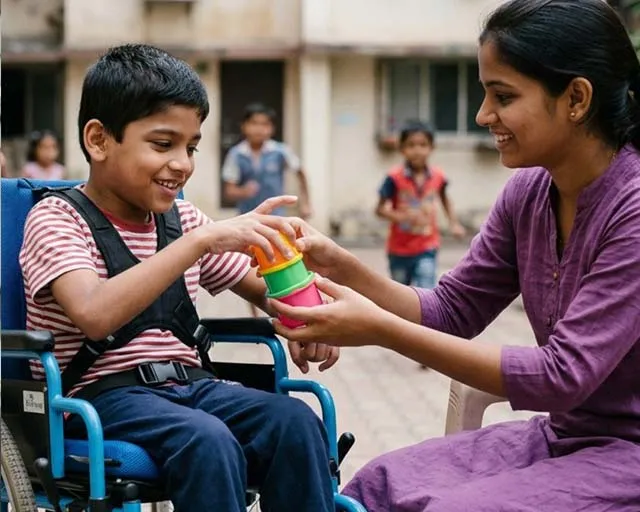
What is Cerebral Palsy?
Cerebral palsy (CP) is a group of disorders affecting movement, posture, and balance, caused by damage to the developing brain before or during birth.
Symptoms
- Abnormal muscle tone (spasticity or floppiness)
- Delayed motor milestones
- Difficulty with coordination and balance
- Involuntary movements
- Difficulty with speech and swallowing
- Seizures in some cases
Causes
- Brain damage during fetal development
- Birth complications (oxygen deprivation)
- Premature birth
- Infections during pregnancy
- Genetic mutations
- Head trauma in early childhood
Physiotherapy Treatment
Treatment is individualised and includes stretching for spasticity, functional strengthening, motor learning and task-specific training, orthotics management, gait training, and parent/caregiver education.
Recommended Exercises
- Stretching routines for tight muscles
- Functional reaching and grasping activities
- Sit-to-stand training
- Walking and balance activities
- Play-based therapy exercises
- Aquatic therapy exercises
Vertigo & Vestibular Disorders
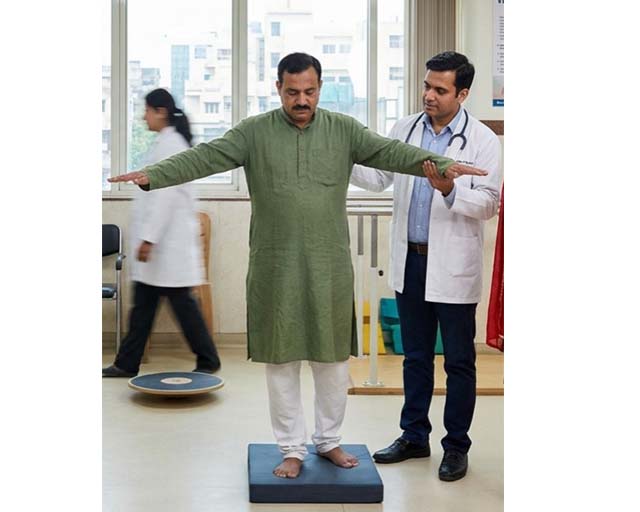
What is Vertigo & Vestibular Disorders?
Vestibular disorders affect the inner ear and brain, causing dizziness, vertigo, imbalance, and visual disturbances.
Symptoms
- Spinning sensation (vertigo)
- Dizziness and lightheadedness
- Balance problems and unsteadiness
- Nausea and vomiting
- Visual disturbances
- Difficulty concentrating
Causes
- BPPV (benign paroxysmal positional vertigo)
- Vestibular neuritis or labyrinthitis
- Meniere's disease
- Head injury
- Aging
- Migraine-associated vertigo
Physiotherapy Treatment
Treatment includes canalith repositioning manoeuvres (Epley manoeuvre for BPPV), vestibular rehabilitation exercises, habituation exercises, gaze stabilisation, and balance retraining.
Recommended Exercises
- Epley or Semont manoeuvres (for BPPV)
- Gaze stabilisation exercises (VOR x1, x2)
- Habituation exercises
- Balance exercises on various surfaces
- Walking with head turns
- Dynamic visual acuity training
Cardio & Pulmonary Conditions
Cardiac and respiratory rehabilitation to improve endurance and quality of life.
Post-Heart Attack Rehab
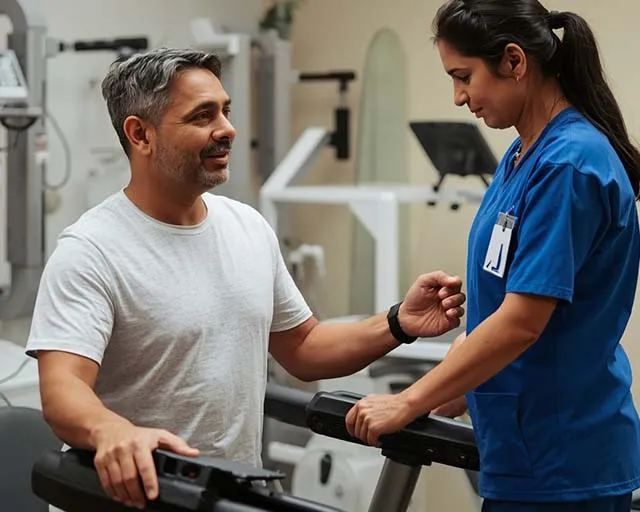
What is Post-Heart Attack Rehab?
Cardiac rehabilitation after a myocardial infarction (heart attack) is a supervised programme to help patients safely rebuild cardiovascular fitness and reduce the risk of future events.
Symptoms
- Reduced exercise tolerance
- Shortness of breath with minimal exertion
- Chest discomfort
- Fatigue and weakness
- Anxiety and fear of physical activity
Causes
- Coronary artery disease
- Blood clot blocking a coronary artery
- High blood pressure and cholesterol
- Smoking
- Diabetes
- Family history of heart disease
Physiotherapy Treatment
Phase-based cardiac rehabilitation: Phase 1 (in-hospital mobilisation), Phase 2 (supervised outpatient exercise with ECG monitoring), Phase 3 (community-based maintenance). Includes risk factor education and lifestyle modification.
Recommended Exercises
- Graded walking programmes
- Stationary cycling (low to moderate intensity)
- Light upper and lower limb exercises
- Breathing exercises
- Warm-up and cool-down routines
- Progressive aerobic conditioning
COPD Rehabilitation
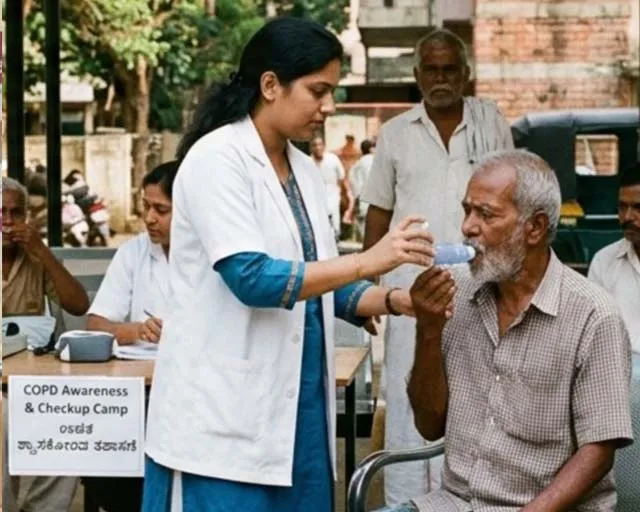
What is COPD Rehabilitation?
Chronic Obstructive Pulmonary Disease (COPD) rehabilitation is a comprehensive programme to improve exercise capacity, reduce breathlessness, and enhance quality of life.
Symptoms
- Progressive shortness of breath
- Chronic cough with mucus production
- Wheezing
- Frequent respiratory infections
- Fatigue and reduced exercise tolerance
- Barrel-shaped chest (in advanced cases)
Causes
- Smoking (primary cause)
- Long-term exposure to air pollutants
- Occupational dust and chemical exposure
- Alpha-1 antitrypsin deficiency (genetic)
- Recurrent respiratory infections
Physiotherapy Treatment
Pulmonary rehabilitation includes aerobic and resistance training, breathing retraining (pursed lip breathing, diaphragmatic breathing), airway clearance techniques, energy conservation strategies, and oxygen therapy education.
Recommended Exercises
- Pursed lip breathing
- Diaphragmatic breathing exercises
- Upper limb endurance exercises
- Walking with pacing and breathing coordination
- Stair climbing (graded)
- Seated resistance exercises
Asthma Management
What is Asthma Management?
Physiotherapy for asthma focuses on breathing retraining, aerobic conditioning, and trigger management to reduce symptoms and improve lung function.
Symptoms
- Recurrent wheezing
- Shortness of breath
- Chest tightness
- Coughing (especially at night or early morning)
- Exercise-induced symptoms
Causes
- Allergens (dust, pollen, pet dander)
- Respiratory infections
- Exercise (exercise-induced asthma)
- Cold air
- Air pollution and irritants
- Stress and strong emotions
Physiotherapy Treatment
Treatment includes Buteyko breathing method, nasal breathing training, aerobic conditioning, education on trigger management, and warm-up strategies to reduce exercise-induced symptoms.
Recommended Exercises
- Buteyko breathing exercises
- Nasal breathing practice
- Gradual aerobic conditioning (swimming is ideal)
- Yoga breathing exercises (pranayama)
- Interval training with adequate warm-up
- Core and posture exercises for optimal breathing
Post-COVID Cardio Rehab
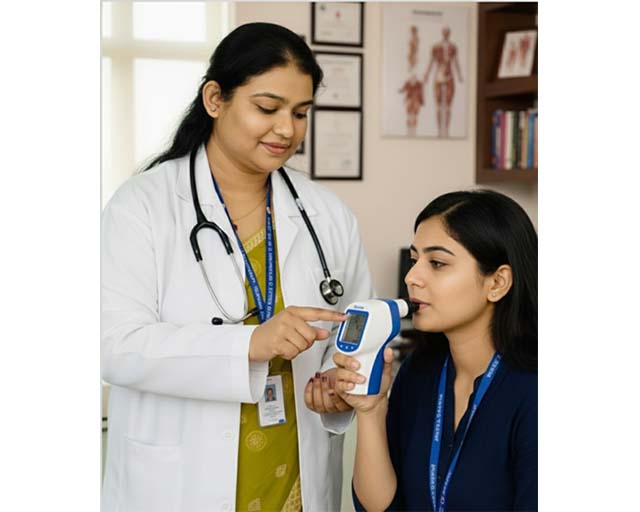
What is Post-COVID Cardio Rehab?
Post-COVID rehabilitation addresses persistent cardiovascular and respiratory symptoms (long COVID), helping patients gradually return to normal function.
Symptoms
- Persistent fatigue and breathlessness
- Exercise intolerance
- Heart palpitations
- Chest pain
- Brain fog and concentration difficulties
- Muscle weakness and joint pain
Causes
- SARS-CoV-2 infection
- Post-inflammatory effects on heart and lungs
- Deconditioning from prolonged illness/bed rest
- Autonomic nervous system dysfunction
- Psychological impact of illness
Physiotherapy Treatment
Graduated reconditioning programme starting at very low intensity, with continuous symptom monitoring. Includes breathing exercises, energy pacing strategies, and psychological support. Progress is guided by symptom response.
Recommended Exercises
- Controlled breathing exercises
- Very gentle walking (graded)
- Seated exercises (upper and lower limb)
- Balance exercises
- Yoga and relaxation techniques
- Progressive aerobic conditioning (symptom-limited)
Geriatric Conditions
Age-appropriate rehabilitation to maintain mobility, strength, and independence.
Fall Prevention
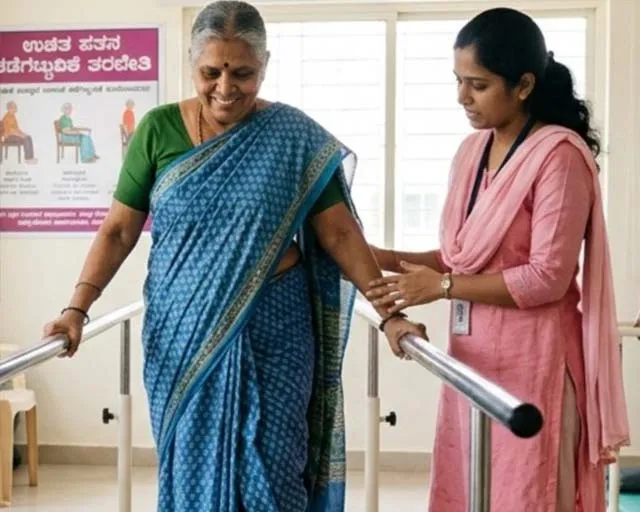
What is Fall Prevention?
Fall prevention programmes assess and address risk factors for falls in older adults through balance training, strength exercises, and environmental modifications.
Symptoms
- History of falls
- Unsteady gait
- Fear of falling
- Dizziness or lightheadedness
- Visual impairment
- Muscle weakness in legs
Causes
- Muscle weakness and deconditioning
- Balance impairments
- Medication side effects
- Vision problems
- Environmental hazards
- Neurological conditions
Physiotherapy Treatment
Comprehensive fall risk assessment followed by individualised programmes including strength and balance training, gait training, vision referral, medication review coordination, and home safety assessment with modification recommendations.
Recommended Exercises
- Tandem standing and walking
- Single-leg balance (with support)
- Heel-to-toe walking
- Sit-to-stand practice
- Calf raises and mini squats
- Step-ups and side-stepping
Osteoporosis Management
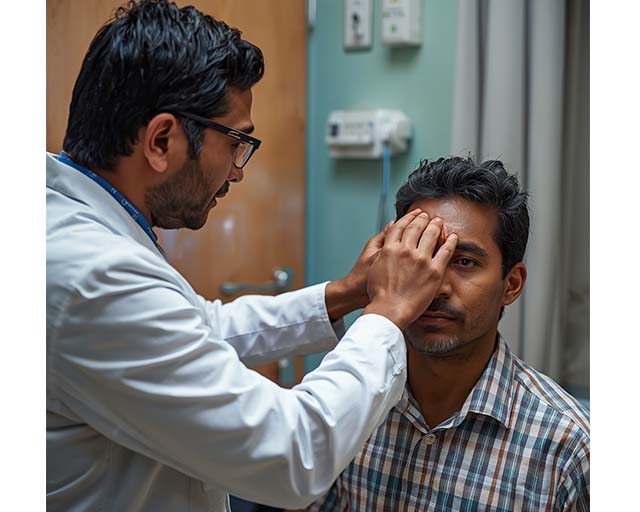
What is Osteoporosis Management?
Osteoporosis is a condition where bones become weak and brittle, increasing fracture risk. Physiotherapy focuses on weight-bearing exercise and fall prevention.
Symptoms
- Often asymptomatic until a fracture occurs
- Loss of height over time
- Stooped posture (kyphosis)
- Back pain from compression fractures
- Bones that break easily
Causes
- Age-related bone loss
- Post-menopausal oestrogen decline
- Calcium and vitamin D deficiency
- Sedentary lifestyle
- Smoking and excessive alcohol
- Long-term corticosteroid use
Physiotherapy Treatment
Treatment focuses on weight-bearing and resistance exercises to maintain bone density, postural correction (anti-kyphosis exercises), balance training for fall prevention, and safe movement education.
Recommended Exercises
- Weight-bearing walking
- Resistance training (squats, lunges)
- Thoracic extension exercises
- Balance exercises for fall prevention
- Heel drops for bone loading
- Posture correction exercises
Sarcopenia
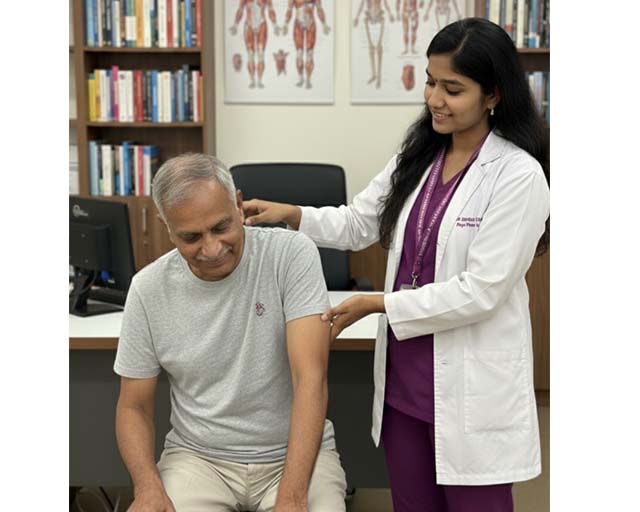
What is Sarcopenia?
Sarcopenia is age-related loss of muscle mass and strength, leading to reduced physical function, increased fall risk, and loss of independence.
Symptoms
- Gradual loss of muscle mass
- Weakness and reduced grip strength
- Difficulty with stairs and getting up from chairs
- Slower walking speed
- Fatigue with daily activities
- Increased fall risk
Causes
- Age-related hormonal changes
- Reduced physical activity
- Inadequate protein intake
- Chronic inflammation
- Neuromuscular changes with aging
- Chronic diseases
Physiotherapy Treatment
Progressive resistance training is the cornerstone, combined with nutrition guidance (adequate protein intake), balance training, functional exercise training, and aerobic conditioning.
Recommended Exercises
- Squats (chair-assisted if needed)
- Leg press or resistance band exercises
- Bicep curls and overhead press
- Sit-to-stand repetitions
- Step-ups
- Resistance band exercises for major muscle groups
Women's Health Conditions
Specialised physiotherapy addressing women's health needs across all life stages.
Prenatal Physiotherapy
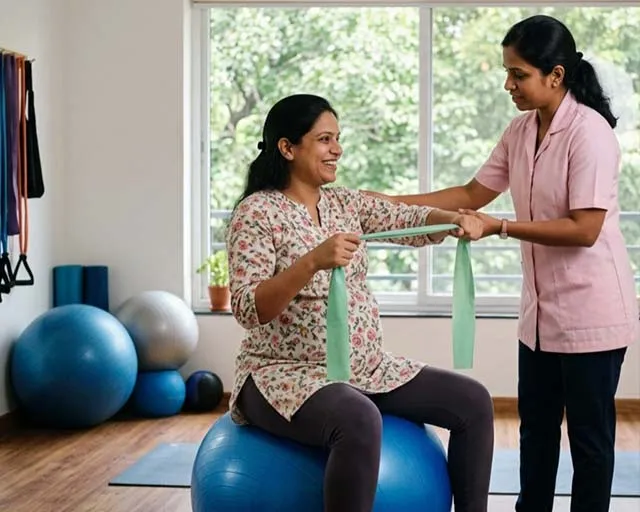
What is Prenatal Physiotherapy?
Prenatal physiotherapy provides safe exercises and pain management during pregnancy, helping women stay active and prepare for delivery.
Symptoms
- Lower back and pelvic girdle pain
- Sciatica during pregnancy
- Swelling in legs and feet
- Diastasis recti (abdominal separation)
- Incontinence
- Round ligament pain
Causes
- Hormonal changes (relaxin softening ligaments)
- Postural changes from growing belly
- Weight gain and shifted centre of gravity
- Increased joint laxity
- Pressure on pelvic floor
Physiotherapy Treatment
Safe exercise prescription for each trimester, manual therapy for pain relief, pelvic floor education and strengthening, preparation for labour (breathing and positioning), and management of pregnancy-related conditions.
Recommended Exercises
- Pelvic floor exercises (Kegels)
- Prenatal yoga and stretching
- Walking programmes
- Modified squats and lunges
- Cat-cow stretches for back pain
- Side-lying hip abduction
Postnatal Recovery
What is Postnatal Recovery?
Postnatal physiotherapy helps mothers recover after childbirth, addressing core and pelvic floor weakness, diastasis recti, and safe return to exercise.
Symptoms
- Weak core and pelvic floor
- Diastasis recti (abdominal gap)
- Urinary incontinence
- Lower back pain
- Poor posture from feeding/carrying baby
- Fatigue
Causes
- Pregnancy and delivery stresses on the body
- Hormonal changes post-delivery
- Abdominal and pelvic floor stretching during pregnancy
- C-section surgical recovery
- Sleep deprivation and physical demands of newborn care
Physiotherapy Treatment
Graduated core restoration programme, pelvic floor rehabilitation, diastasis recti assessment and treatment, scar tissue management (C-section), postural correction, and safe return-to-exercise guidance.
Recommended Exercises
- Gentle pelvic floor activation
- Diaphragmatic breathing with core connection
- Modified crunches (after clearance)
- Bridging exercises
- Transversus abdominis activation
- Gradual return to walking and aerobic exercise
Pelvic Floor Dysfunction
What is Pelvic Floor Dysfunction?
Pelvic floor dysfunction involves weakness, tightness, or incoordination of the pelvic floor muscles, affecting bladder, bowel, and sexual function.
Symptoms
- Urinary incontinence or urgency
- Pelvic pain or heaviness
- Difficulty emptying bladder or bowels
- Pain during intercourse
- Pelvic organ prolapse symptoms
- Lower back or hip pain
Causes
- Pregnancy and childbirth
- Chronic straining (constipation)
- Heavy lifting
- Obesity
- Chronic coughing
- Menopause-related tissue changes
- Pelvic surgery
Physiotherapy Treatment
Pelvic floor assessment, biofeedback training, Kegel exercises with correct technique, relaxation techniques for overactive pelvic floor, bladder retraining, and lifestyle modification advice.
Recommended Exercises
- Kegel exercises (strength and endurance)
- Quick flick contractions
- Pelvic floor relaxation breathing
- Core-pelvic floor coordination exercises
- Squats with pelvic floor engagement
- Bridge with pelvic floor activation
Sports Injuries
Return-to-sport rehabilitation with evidence-based protocols for athletes at every level.
Hamstring Tear
What is Hamstring Tear?
A hamstring tear is a strain or complete rupture of one or more of the three hamstring muscles at the back of the thigh, common in sprinting and kicking sports.
Symptoms
- Sudden sharp pain in the back of the thigh
- Popping sensation at the time of injury
- Swelling and bruising
- Difficulty walking or straightening the knee
- Weakness in the affected leg
Causes
- Sudden acceleration or sprinting
- Inadequate warm-up
- Muscle imbalance (quad-hamstring ratio)
- Poor flexibility
- Previous hamstring injury
- Fatigue during sport
Physiotherapy Treatment
Progressive rehabilitation with eccentric strengthening (Nordic hamstring exercises), gradual return to running, sport-specific agility drills, and hamstring-to-quadriceps strength ratio optimisation.
Recommended Exercises
- Gentle hamstring stretches (early phase)
- Isometric hamstring holds
- Nordic hamstring curls (progressive)
- Single-leg deadlifts
- Running progressions (jog to sprint)
- Sport-specific agility drills
Achilles Tendinopathy
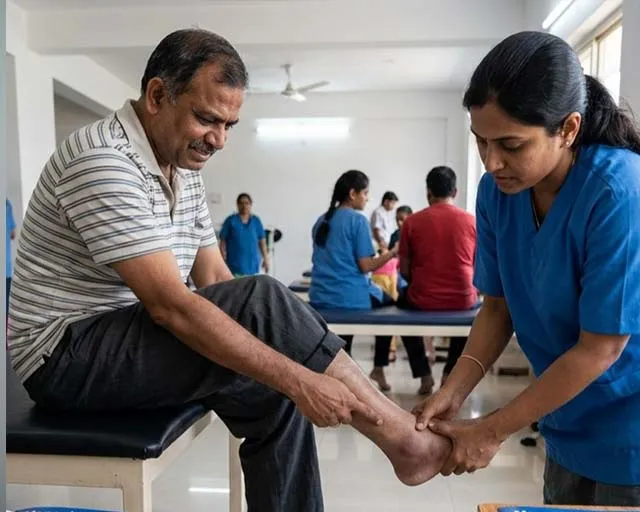
What is Achilles Tendinopathy?
Achilles tendinopathy is a chronic overuse injury of the Achilles tendon causing pain, swelling, and stiffness at the back of the ankle.
Symptoms
- Pain at the back of the heel or lower calf
- Morning stiffness in the tendon
- Pain that worsens with activity
- Thickening or swelling of the tendon
- Reduced ankle dorsiflexion
Causes
- Sudden increase in training load
- Poor calf flexibility
- Overpronation of the foot
- Improper footwear
- Age-related tendon degeneration
- Running on hard or hilly surfaces
Physiotherapy Treatment
Evidence-based eccentric loading programme (Alfredson protocol), calf strengthening, load management, footwear advice, taping, and gradual return to sport with monitored tendon response.
Recommended Exercises
- Eccentric heel drops (straight and bent knee)
- Isometric calf holds
- Calf raises (bilateral to unilateral)
- Ankle range of motion exercises
- Single-leg balance exercises
- Gradual running progression
Runner's Knee
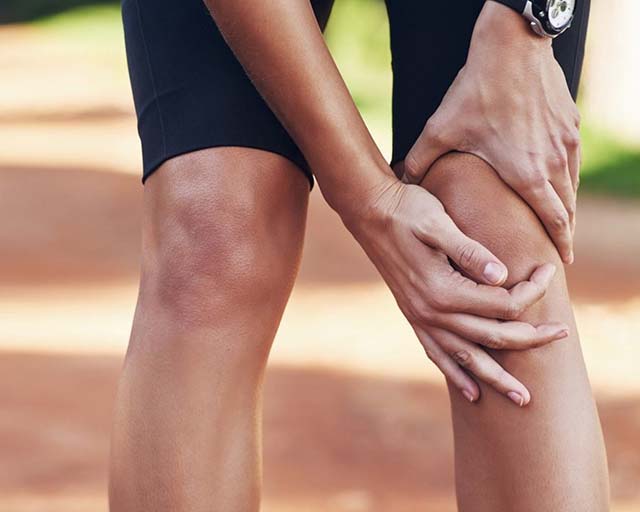
What is Runner's Knee?
Runner's knee (patellofemoral pain syndrome) is pain around or behind the kneecap, common in runners and athletes who do a lot of knee bending.
Symptoms
- Dull aching pain around or behind the kneecap
- Pain worsening with stairs, squatting, or prolonged sitting
- Grinding or clicking sensation
- Swelling around the kneecap
- Pain during or after running
Causes
- Overuse and training errors
- Weak quadriceps (VMO muscle)
- Tight IT band and lateral structures
- Poor hip and knee alignment
- Flat feet or overpronation
- Inappropriate footwear
Physiotherapy Treatment
VMO (vastus medialis oblique) strengthening, hip abductor strengthening, IT band stretching, patellar taping, biomechanical assessment and correction, and graduated return to running.
Recommended Exercises
- Terminal knee extensions
- Straight leg raises with external rotation
- Side-lying hip abduction
- Single-leg squats (controlled)
- Step-downs (forward and lateral)
- IT band and quad stretches
Concussion Management
What is Concussion Management?
Concussion is a mild traumatic brain injury requiring careful management with a graduated return-to-sport protocol and vestibular rehabilitation.
Symptoms
- Headache and pressure in the head
- Dizziness and balance problems
- Nausea
- Confusion and brain fog
- Sensitivity to light and noise
- Sleep disturbances
Causes
- Direct blow to the head
- Whiplash-type injury
- Falls
- Collision with another player
- Impact from sports equipment
Physiotherapy Treatment
Graduated return-to-sport protocol (6 stages), vestibular rehabilitation if dizziness persists, cervical spine assessment and treatment, exertion testing, and symptom monitoring throughout recovery.
Recommended Exercises
- Light aerobic exercise (symptom-limited)
- Sport-specific exercises (no contact)
- Balance and coordination drills
- Cervical spine exercises
- Non-contact training drills
- Full contact practice (final stage, with medical clearance)
Book an appointment at Physiotherapy (CAPT)
Tell us what you need and the clinic will call you back to confirm a time.